200 Years of Britain's Sabre-toothed Cat

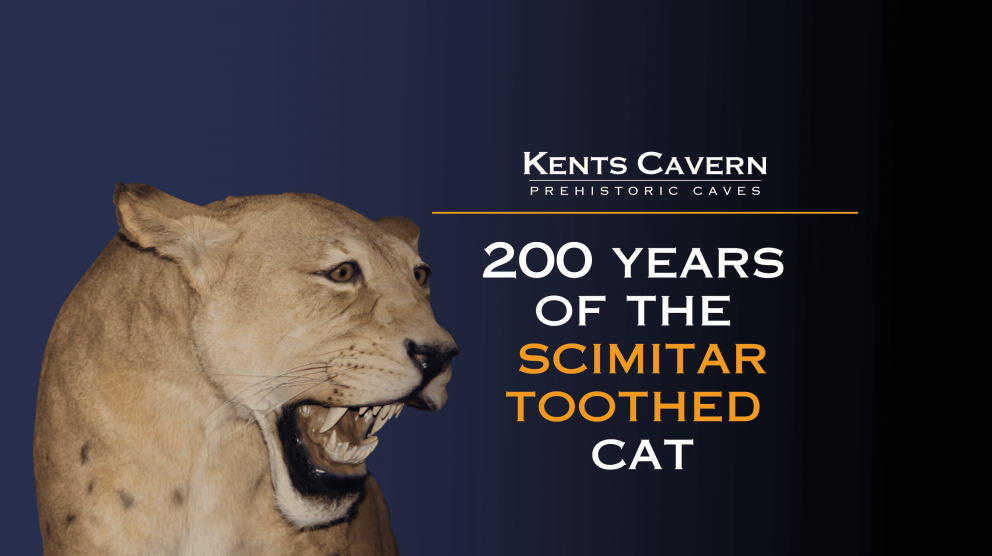
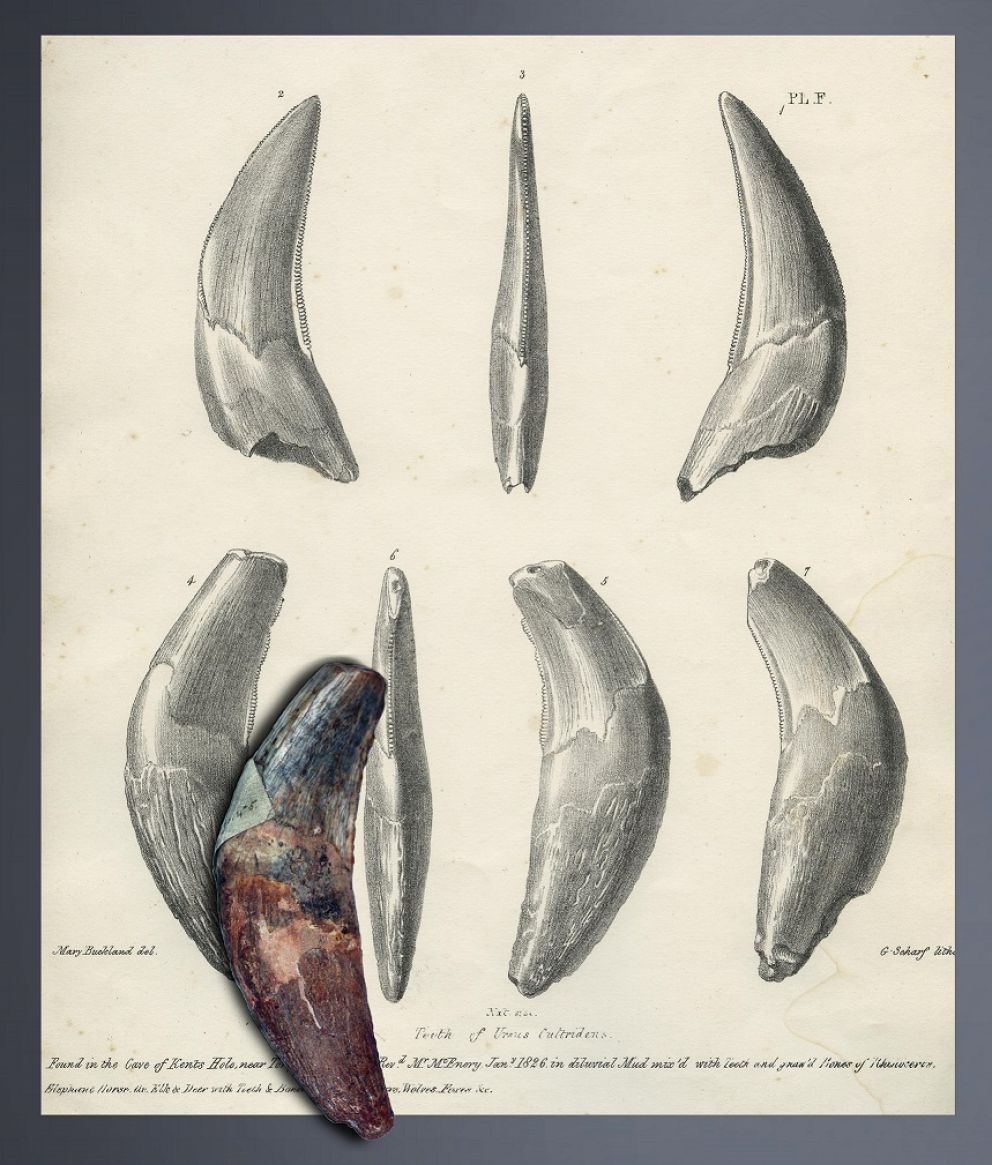
The story of the sabre-toothed cat actually began here at Kents Cavern! It all started with the discovery of five mysterious teeth in 1826. To celebrate the 200 year anniversary of the discovery of these teeth, we will tell the tale of the first sabre-toothed cat…
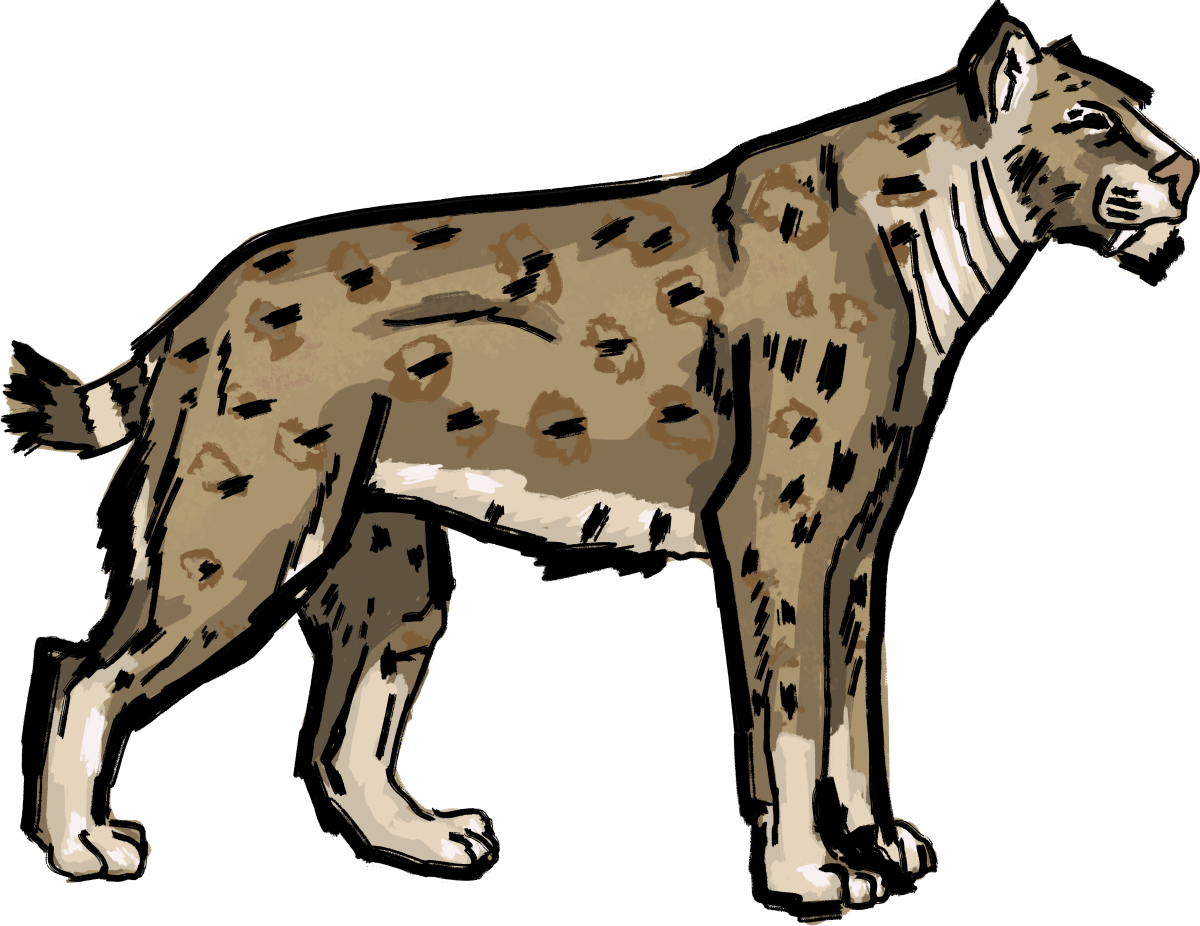
the discovery of the sabre-toothed cat
In 1826, while digging out part of Kents Cavern now known as ‘The Wolf’s Den’, Father John MacEnery, a local priest and amateur archaeologist, found something rather interesting. He discovered five canine teeth - but of what animal he could not ascertain.
They were then passed to William Buckland, a famous palaeontologist and geologist, who could not identify them either. They were given to several different experts in the field who also couldn't identify them; some even suggested they belonged to a dinosaur who lived only a few thousand years ago (or at least, they called it a giant lizard as the word dinosaur wouldn’t be coined for another 15 years!).
Eventually they ended up in the hands of Georges Cuvier, another famous palaeontologist, who recognised them as being very similar to some teeth he had studied from Italy. He had used these teeth to describe a new species of bear - Ursus cultridens, and suggested that Macenery had found another example of this animal (albeit in a different part of the continent, from a much younger time period). But this wasm, once again, incorrect!
The correct naming of the sabre teeth
It wasn’t until 1846, when the teeth came into the possession of Richard Owen, did the true identity of this animal come to light. Owen revised the evidence and the first sabre-tooth cat was described and named - Machairodus latidens, now known as Homotherium latidens. Owen didn’t use the name “sabre-toothed cat”, but he did call it a “sabre-toothed feline animal”. Less catchy, but still the very first time an animal was described as having sabres for teeth!
A few years later a poem was written on the animals that used to live in Britain during the ice age. In this poem the “striped saber toothed tiger” was mentioned. At this point in time, the only sabre-toothed cat remains found in Britain were these same teeth from Kents Cavern, so this had to have been the inspiration. This poem is where the name sabre-toothed tiger originates. Today palaeontologists prefer to use the term sabre-toothed cat, since it wasn’t a tiger at all; your pet cat is actually more closely related to a tiger than either of them are to a sabre-toothed cat!
did the scimitar-toothed cat actually live in britain?
Five teeth were found in the cave earth layer of Kents Cavern. This sediment started entering into the cave no more than 80,000 years ago. We’re not entirely sure when the scimitar-toothed cat stopped living in Western Europe, but we typically stop finding their bones after around 200,000 years ago, suggesting they had moved on from Britain at this point in time. This means the teeth from Kents Cavern entered the cave well over 100,000 years after the scimitar toothed cat stopped living in Britain.
Even more confusing is that four of these teeth were identical - they came from the upper right side of the mouth, meaning these teeth came from at least four different individuals! Only one other scimitar-toothed cat tooth has been found in Kents Cavern since MacEnery’s excavations; just a single incisor. No bones of this animal have ever been found here. So how did these teeth end up here, and why have we only found teeth?
Well, there are a couple of hypotheses. There is some scant evidence that Homotherium did indeed live in Britain and far later than previously thought, but we’ll get onto that in a moment. For the longest time it was thought that the teeth were originally buried in the Breccia of Kents Cavern; a much older layer of sediment dating to around 420,000 years old. From here the teeth were eroded out of the breccia and redeposited in the cave earth only to be later found by MacEnery and Pengelly. Another idea is that these Homotherium died close to Kents Cavern and their teeth (and only their teeth somehow) were washed into the cavern when the modern entrances formed.
Very recently however a few Homotherium specimens have been discovered that may indicate it did live in Europe until recently, or at least, some individuals were in the area. The first was a lower jaw bone that was dredged up from the north sea in 2000. It was dated to be 28,000 years old, far later than the suggested extinction of Homotherium in Europe 300,000 years ago. However the DNA from this jawbone matched almost perfectly with a specimen from North America, categorised as the species Homotherium serum, so it has been suggested that this actually represents a backwards migration of Homotherium from North America into Europe and Asia, effectively recolonising the area once inhabited by their relatives hundreds of thousands of years earlier.
But the most recent discovery brings a small problem to this idea. In 2024 a paper was published on the discovery of the very first saber toothed cat mummy. It was found in 2020 from the permafrost of Siberia, and although it has been dated to just over 30,000 years old, it has indeed been identified as H. latidens, the same species that was originally found in Kents Cavern. So it's possible that a small population of Homotherium did survive in Europe until the end of the ice age. As for Britain, however, the fact still stands; the only Homotherium bones that are in sediment younger than 300,000 years old come from caves, and these are strongly believed to have been brought in by less natural means.
how did the sabre teeth end up in kents cavern?
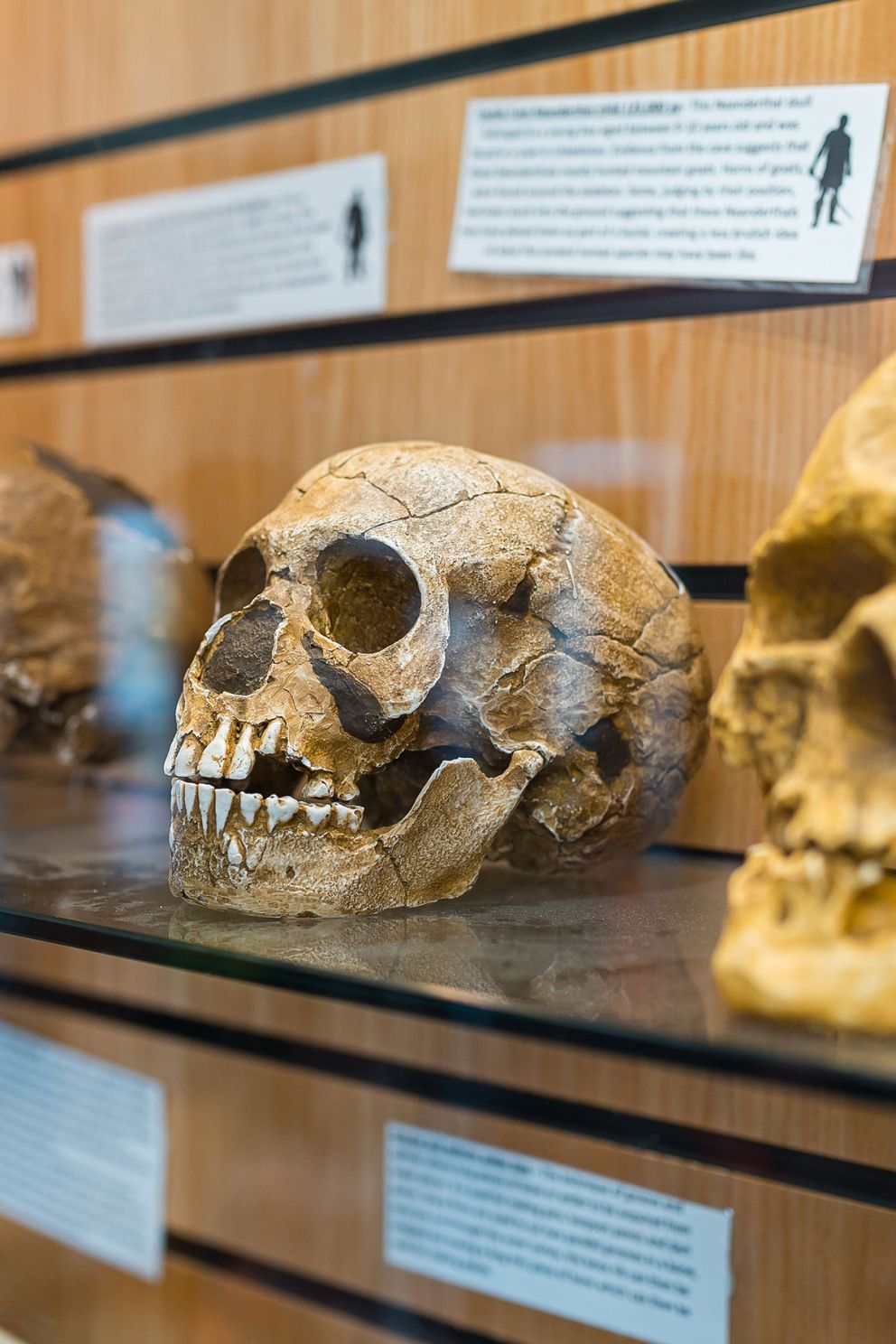
This brings us to the most widely accepted explanation for why the teeth were in Kents Cavern. It is thought that...we are to blame! Humans, Homo sapiens or possibly Homo neanderthalensis, are hypothesised to have brought the teeth into the cave. As to why they were brought here we can only guess! They could have been incorporated into their jewellery or clothing, perhaps they were prized as treasure, used in rituals, or they may have simply been a part of someone’s collection.
The story of the sabre-toothed cat is a long and complicated one, spanning two centuries. While many questions have been answered there is still much to learn. New discoveries are constantly being revealed - perhaps in a year's time there will be even more of the story to tell...
references
Barnett, R. (2013). An inventory of British remains of Homotherium (Mammalia, Carnivora, Felidae), with special reference to the material from Kents Cavern. Geobios, Vol. 47, I. 1-2, pg. 19-29. Retrieved from (PDF) An inventory of British remains of Homotherium (Mammalia, Carnivora, Felidae), with special reference to the material from Kent's Cavern
Vogel, G. (2017). This jaw bone bolsters the case for human contact with sabre-toothed cats in Europe. Science. Retrieved from https://www.science.org/content/article/jaw-bone-bolsters-case-human-contact-saber-toothed-cats-europe


 picked.cave.lively